File a Nonsubstantive Change
eRules Help
File a Nonsubstantive Change
Agencies are required to file notices of effective date with the Office of Administrative Rules through the eRules platform.
1. Visit eRules and select the Rule Filings tab.
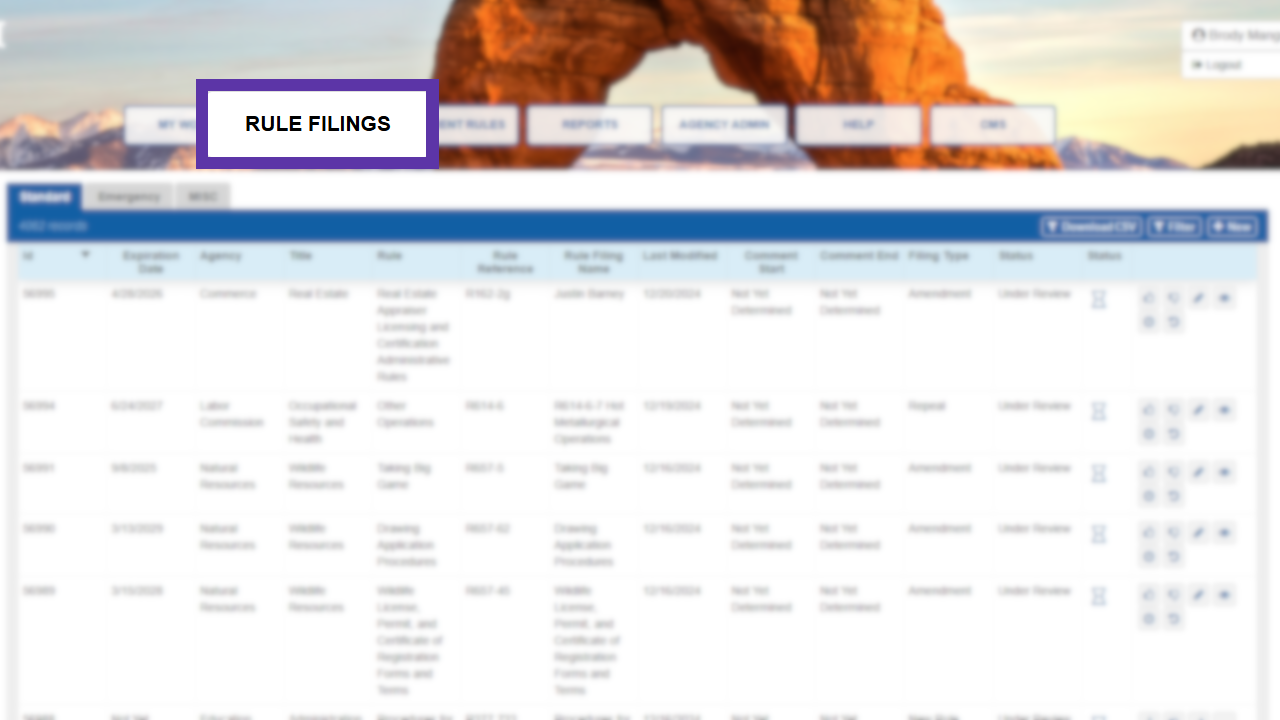
2. While in the Rule Filings page, select + New on the top blue navigation bar.

3. Select the agency, generally the rulemaking department, under the Agency drop-down menu. After selecting the agency, the Title drop-down menu will appear and populate with applicable titles under that agency. Select the desired title for the rule filing.

4. Select Nonsubstantive as the filing type. The selected option will appear as green. After selecting Nonsubstantive, the Rule drop-down menu will populate with the current rules under the title. Select the rule this amendment applies to.

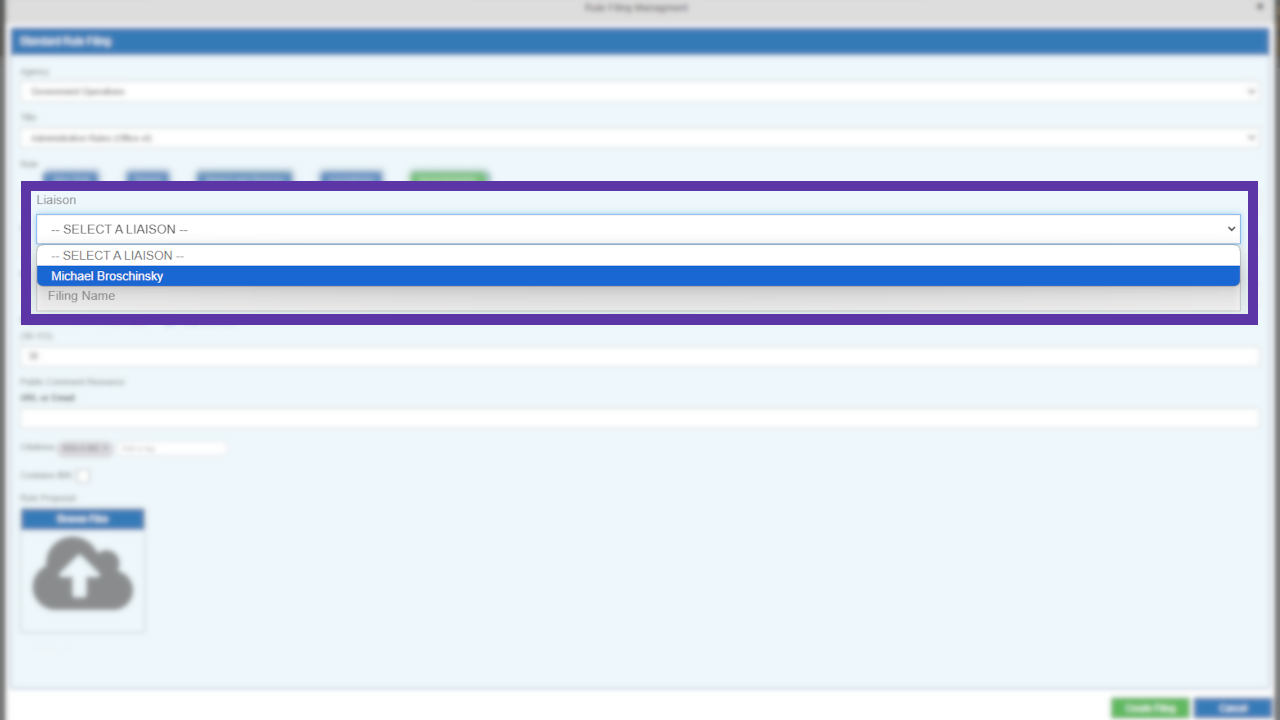
5. Select the proper contact under the Liaison drop-down menu.
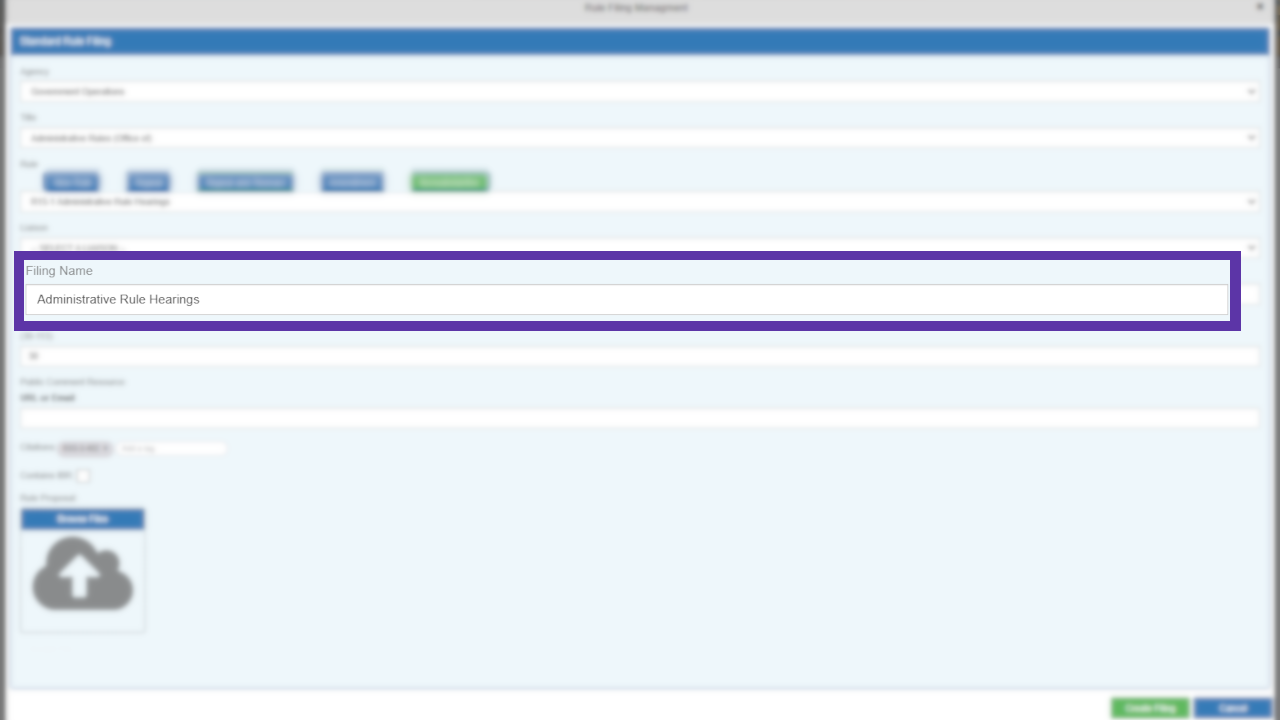
6. Under Filing Name, enter the rule's catchline. If amending a single section, enter the section's catchline.
7. Leave the Public Comment Period field with the default number.
Note: The Office of Administrative Rules is responsible for making a nonsubstantive change effective. Nonsubstantive changes are not published in the Utah State Bulletin and are not subject to a public comment period.

8. Enter the email address of a contact person for this rule under Public Contact Resource.
Note: This email will be used on the public-facing side of the website when a person selects Provide Public Comment.

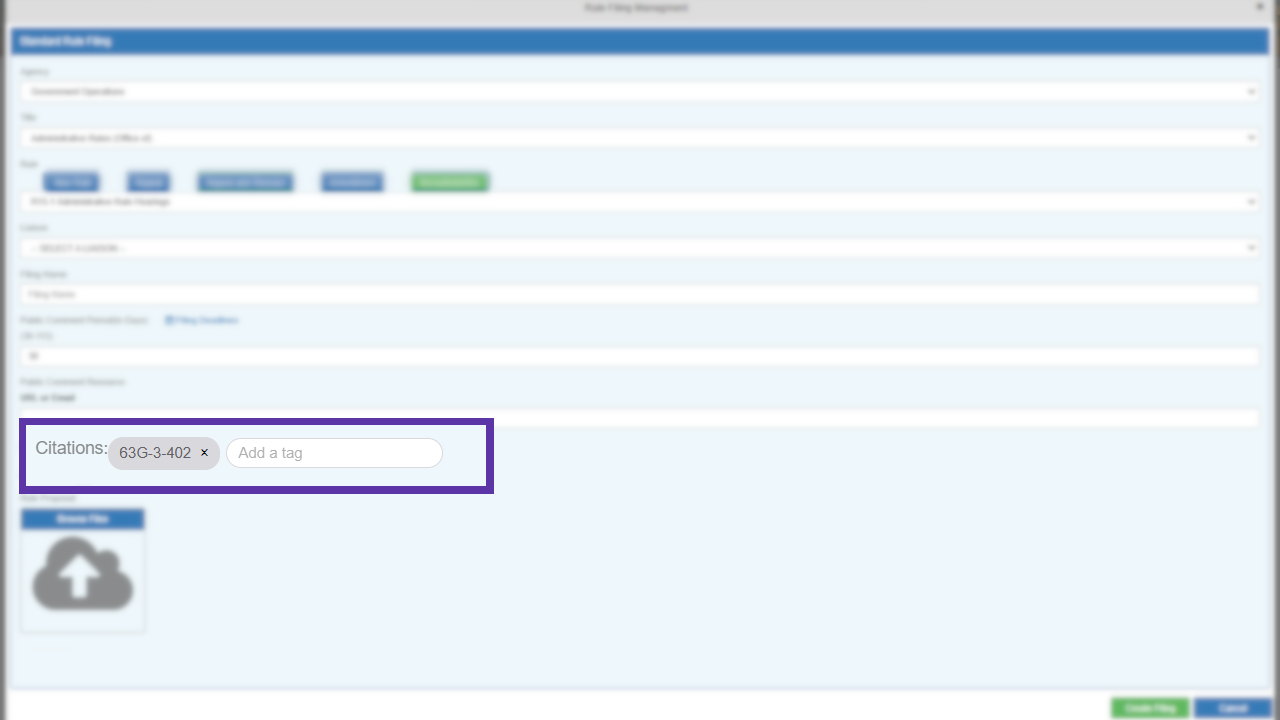
9. If this nonsubstantive filing is changing citations, this is where to reflect those changes. To remove a citation, select the X on the grey box. To add citations, type the citation directly in the Add a tag box and press Tab.
10. If this nonsubstantive change includes any new incorporations by reference (IBRs), check the Contains IBR box.
Note: If the nonsubstantive change removes an IBR, this box does not need to be checked. Also, many IBR changes are a substantive change. Contact the Office of Administrative Rules to clarify if an amendment is necessary.

11. Review the responses within the boxes for accuracy. When ready to file, select Browse Files and find the desired filing to upload.

12. Once the filing is uploaded, ensure the cloud turns to a green checkmark, then select the green Create Filing box on the bottom right.

13. The filing will appear as a Nonsubstantive Draft. To submit it for review, select the checkbox on the right.

14. A window will appear confirming submission. Select Submit to Rules.

15. Check that the filing has been submitted by making sure that the filing's status is Under Review. An email will also be sent to users attached to that agency.

After submitting, the Office of Administrative Rules will begin the review process. Emails will be sent out upon approval or rejection throughout the review process, and the Office may contact the rulewriting agency with questions or comments.
Give feedback about this article
Other eRules Help Articles
View Rule Filing History
Learn how to view historical rules and filings.
Change eRules Permissions
Learn how to add, remove, or update rule title permissions.
Download Rules and Filings
Learn how to download current rules and filings through eRules.
File a Proposed Rule
Learn how to file a proposed rule filing in eRules.
File a Notice of Effective Date
Learn how to file a Notice of Effective Date in eRules.
File a Five-Year Review
Learn how to file a notice of five-year review in eRules.